


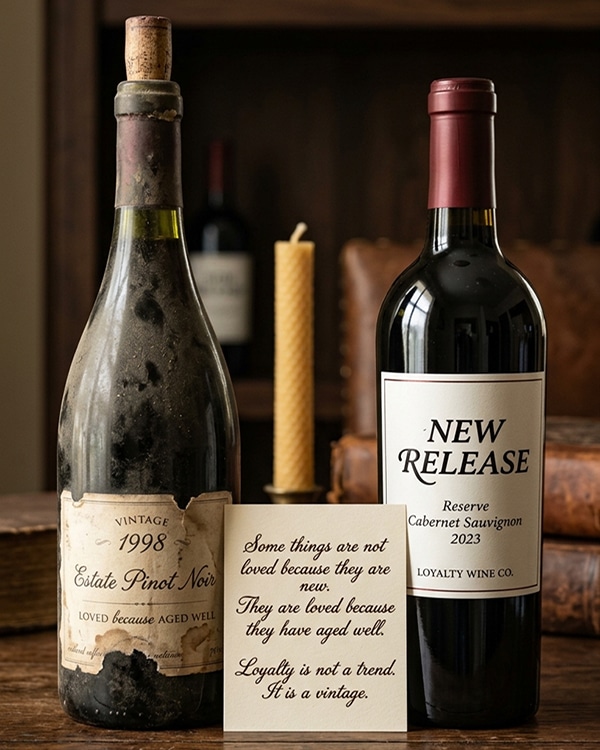
I have also seen ugly websites succeed. Clunky layouts. Questionable color choices. Boxy, old-fashioned design. And the business grew. Customers came back. They told their friends.
This is not a coincidence.
There is something deeper than pixels. Something that no CSS library can give you. Something that no UI/UX audit can measure. It is the reason you stay loyal to a coffee shop with worse furniture, or a brand with a less polished app.
Design attracts. But something else retains.
🕯️ Magic Note
A 2021 study by Harvard Business Review found that emotional connection, not design quality or price, was the primary predictor of customer loyalty across 20 industries. Design gets the first look. Emotion gets the hundredth visit.
This is partially true. Ugliness repels. But beauty does not retain.
Think about the brands you have loved for years. The restaurant you keep returning to. The software you refuse to switch from. The clothing brand you recommend without hesitation.
Is their website the best you have ever seen? Probably not. Is their logo groundbreaking? Unlikely.
So why do you stay?
Because they made you feel something that design alone cannot manufacture.
- Consistency Without Boredom: They show up the same way every time, not repetitive, predictable. You know what to expect. That is safety.
- Small Unprompted Generosities: They give before you ask. A free guide. A fast reply on a Sunday. A refund you did not request. These moments are not scalable. They are memorable.
- The Willingness to Say No: They turn away customers who do not fit. They refuse projects that dilute their focus. This is not arrogance. It is clarity. And clarity is magnetic.
But love is not a numbers game. You do not need more people to say “nice.” You need the right people to say “that is for me.”
When you try to impress everyone, you impress no one. When you try to serve every customer, you serve no one well. When your brand tries to be everything, it becomes nothing.
The most loved brands are not the most popular. They are the most specific. They know who they are for. And they are willing to be ignored by the rest.
This is scary. It means saying no to potential revenue. But it is the only path to genuine loyalty.
🕯️ Magic Note
In his book “Differentiate or Die,” Jack Trout argues that the most successful brands own a word in the customer’s mind. Volvo owns “safety.” FedEx owns “overnight.” Not design. A word. What word does your brand own?
This is not loyalty. It is a transaction with a spreadsheet.
Real loyalty is not bought. It is earned through moments that cannot be automated. The customer service agent who remembered your name. The email that arrived at exactly the right time, not because of a sequence, because a human noticed.
Loyalty programs keep customers. Loyalty moments create advocates.
You cannot code a moment. You cannot design a genuine interaction. You can only create the conditions for them to happen. And then trust your people to show up.
A fast-loading website charges it a little. A beautiful checkout charges it a little. These are the small things. They matter.
But a human reply to a frustrated email at 10 PM charges it a lot. An apology without excuse charges it a lot. A refund you did not ask for charges it a lot.
When the battery is full, customers forgive your ugly button. They forgive your slow page. They forgive your typo. Because the battery is not about design. It is about care.
Most brands focus on the small charges and ignore the large ones. They optimize the pixels and ignore the people. This is why they are not loved.
- When was the last time you did something for a customer that was not scalable?
- When was the last time you said no to a project that did not fit?
- If your website disappeared tomorrow, would your customers still find you? Would they still trust you?
⚡ Whisper
The brand that is loved is not the brand with the best design. It is the brand that makes the customer feel seen, remembered, and valued. Not through pixels. Through presence. Design is the handshake. Love is the conversation that follows. You cannot code the second part. You can only live it. And then, quietly, without a landing page or a pop-up, they stay. Not because you convinced them. Because you mattered.


